Showing posts with label Eagle. Show all posts

Saturday, July 14, 2012

Brown Snake Eagle

Brown Snake Eagle
Flaying Animal | Brown Snake Eagle | has dark brown overall appearance, large head and upright stance. Adult has dark brown plumage. Slight white mottling is visible on flight feathers. Underwing is silvery-grey. In fresh plumage, brown tail shows three narrow, white bars and a fine white tip. Head is dark brown, as body. Hooked bill is black with pale grey cere. Eyes are yellow. Long bare legs and stubby feet are pale grey. Both sexes are similar in plumage, with female slightly larger than male, about 5%. Juvenile is similar to adult, but some individuals may be slightly paler, or have fine pale feathers' edges, giving a faint scaled effect. Head and breast show white feathers bases often conspicuous.

Habitat and Habits

Eritrea and Ethiopia: Found on highland slopes with trees and also in thornbush and savanna with some taller trees and in cultivated and other open country (Ash and Atkins 2009). Characteristically seen perched on high tension pylons.

Zambia: Occurs in any woodland or dry forest and is found much less often on open plains than the Black-breated Snake Eagle .

Botswana: Occurs in any woodland, including pure acacia and mopane, but most common in broad-leafed and mixed acacia woodlands (Penry 1994). Also occurs in tree and bush savanna in high rainfall regions, and in semi-desert areas, it is found near mature woodland, particularly along river valleys and near pans (Penry op cit.). Less common in open savanna away from woodland than the Black-breasted Snake Eagle.

Zimbabwe: Occurs in any relatively open woodland and on the edges of riparian fringing forest.

Brown Snake Eagle

Brown Snake Eagle

Behaviour
Brown Snake Eagle often stands upright on the crown of a large tree. It is usually seen alone, sometimes in pairs, or soaring with other raptors. It may hover clumsily, but rarely. It feeds on snakes and other reptiles, carrying them by the head while flying. It spends most of its time perched in trees, performing short flights from tree to another, and hunting from these perches. Preys are always taken on the ground, often by dropping on it from a perch. More powerful but less agile than other Snake Eagles, it often kills the snake on the ground. Flight displays are simple, usually by a single bird. It soars high above its breeding area while frequently utters loud calls.

Brown Snake Eagle

Population Estimates
Ferguson-Lees and Christie (2001) estimated the global population at the start of the breeding season at 10,000 to 1000,000 individuals. BirdLife International also estimated the number of mature individuals at 10,000 to 100,000 birds, but noted that the supporting data for this estimate are poor.

Brown Snake Eagle

Brown Snake Eagle

Scientific classification
Kingdom    Animalia
Phylum    Chordata
Class    Aves
Order    Falconiformes
Family    Accipitridae
Genus    Circaetus
Species    C. cinereus

Binomial name
Circaetus cinereus


Brown Snake Eagle
Read More »

Wednesday, November 16, 2011

Circoetus cinerascens

Circoetus cinerascens

Flaying Animal | Circoetus cinerascens | This species has an extremely large range, and hence does not approach the thresholds for Vulnerable under the range size criterion (Extent of Occurrence <20,000 km2 combined with a declining or fluctuating range size, habitat extent/quality, or population size and a small number of locations or severe fragmentation). Despite the fact that the population trend appears to be decreasing, the decline is not believed to be sufficiently rapid to approach the thresholds for Vulnerable under the population trend criterion (>30% decline over ten years or three generations). The population size has not been quantified, but it is not believed to approach the thresholds for Vulnerable under the population size criterion (<10,000 mature individuals with a continuing decline estimated to be >10% in ten years or three generations, or with a specified population structure). For these reasons the species is evaluated as Least Concern.
Snake eagles are found in open habitats like cultivated plains arid savannaha, but require trees in which to build a stick nest. The single egg is incubated mainly or entirely by the female.

Circoetus cinerascens

Circoetus cinerascens

Circoetus cinerascens

Circaetus eagles have a rounded head and broad wings. They prey on reptiles, mainly snakes, but also take lizards and occasionally small mammals.

Circoetus cinerascens
Read More »

Steller's sea eagles

Harpy Eagle

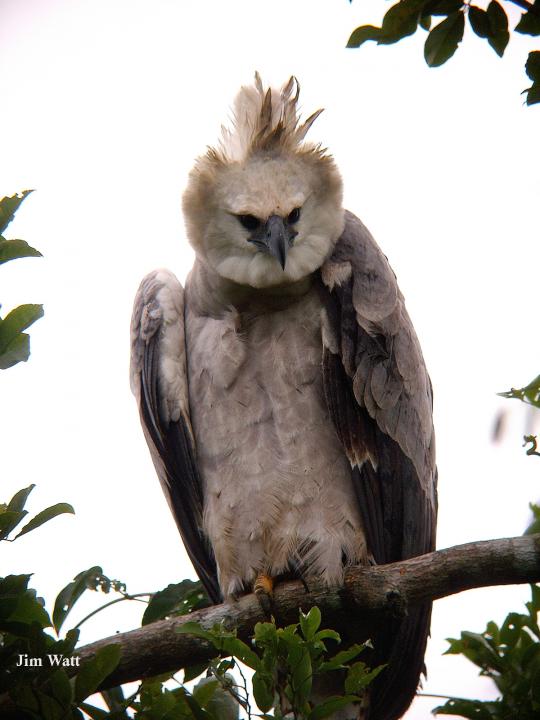
Flaying Animal | Harpy Eagle | Steller's sea eagles | Eagle that looks funny and cute is often referred to as the most powerful eagle in the world. His body can weigh 9 kg, body length 105 cm, and its wings span of 2 meters. Claws longer than the bear paws and has a strong grip, so he can break a man's arm or even through the bones of the head.
Harpy eagles are found in some areas of southern Mexico, Central America and South America. Harpy Eagle is the main prey monkeys, sloths, large birds like macaws birds, iguanas and boa sometimes.

Harpy Eagle

Harpie spent time at altitude. He was hunting by flying around the top of the tree or from tree to tree. Monkeys and sloth that developed in the tropical forests are the main victims of this eagle. However, sometimes harpie also attacked other large birds, like parakeets fig. In harpie nests, the scientists also found the remains aglouti (large rodents) and other mammals that live in soil. This indicates that the occasional harpie also fell to the ground. When flying, harpie speed can reach 80 km / hour.

Harpy Eagle
Harpy Eagle

This bird breeds in Kamchatka peninsula, coastal areas around the sea of Okhotsk, the lower reaches of the river Amur and Sakhalin north and kepulana Shantar, Russia. The majority of these birds during the season dinging away to the south, in the Kuril Islands and Hokkaidō, Japan.

Harpy Eagle

Steller sea eagles eat fish, especially salmon. Besides fish, Steller's sea eagles also eat birds, mammals and insects. Steller's sea eagles can also eat young sea lions.

Harpy Eagle

Read More »

Tuesday, November 15, 2011

Grey-headed Fish Eagle

Grey-headed Fish Eagle

Flying Animal |Grey-headed Fish Eagle | Grey-headed Fish Eagle is a largish stocky raptor at about 70–75 cm in length. Adults have dark brown wings and back, a grey head and reddish brown breast. The lower belly, thighs and tail are white, the latter having a black terminal band. Sexes are similar, but young birds have a pale buff head, underparts and underwing, all with darker streaking. Grey-headed Fish Eagle, as its English and scientific names suggest, is a specialist fish eater which hunts over lakes, lagoons and large rivers.

Grey-headed Fish Eagle

The grey-headed fish eagle is sometimes mistaken for the lesser fishing eagle (Ichthyophaga humilis); however, the grey-headed fish eagle can be distinguished by its darker, duskier plumage and its tail, of which the last two-thirds of the tail are white, compared to the lesser fishing eagle which has a darker tail with no obvious white banding.

Grey-headed Fish Eagle

The calls of the grey-headed fish eagle include loud gurgles to the tune of awh-awhr and chee-warr repeated five to six times, and owlish oo-wooks. Somewhat disturbingly for other jungle inhabitants, the vocal range of this bird also includes a high-pitched scream.


Grey-headed Fish Eagle


Range
The range of the grey-headed fish eagle extends from India, Nepal, Sri Lanka, east through Southeast Asia, to the Philippines and Sulawesi.


Threats
Although not currently considered to be threatened with extinction, the population of grey-headed fish eagles is declining – the result of numerous and varied threats. The loss of suitable wetland habitat, over-fishing, and pollution result in a loss of nesting sites and reduced food supply. In addition, the construction of dams on the Mekong River is likely to affect the flood regime of the Tonle Sap lake, negatively affecting the grey-headed fish eagle population residing there.
Grey-headed Fish Eagle


Read More »

lchthyophaga humilis

lchthyophaga humilis

Flying Animal | lchthyophaga humilis | Information on the lesser fish-eagle is currently being researched and written and will appear here shortly. There have been some stray reports from Gujarat and Central India and in more recent times from the Kaveri river valley in southern India. The distribution in southern India is not yet confirmed. It is also found in small numbers in other countries in south west Asia.

Kingdom    Animalia
Phylum    Chordata
Class    Aves
Order    Falconiformes
Family    Accipitridae
Genus    Ichthyophaga 


lchthyophaga humilis


Trend justification 
A slow to moderate and on-going population decline is suspected on the basis of rates of habitat loss and degradation.

lchthyophaga humilis

Ecology 
It frequents large forested rivers and wetlands in the lowlands and foothills up to 2,400 m, but usually below 1,000 m.

lchthyophaga humilis

Threats  
Loss of forest habitat along rivers, siltation, over-fishing and increasing human disturbance of waterways are causing widespread declines. It is also declining in Uttar Pradesh, India, partly because of pesticide use and this is presumably relevant throughout much of its range.

lchthyophaga humilis

Read More »

Haliaeetus vociferoides


Flaying Animal | Haliaeetus vociferoides | The large Madagascar fish-eagle (Haliaeetus vociferoides) is one of the rarest birds of prey and is the largest raptor in Madagascar. 70-80 cm. Large fish-eagle. Dark reddish-brown back and underparts (latter streaked rufous), dark brown cap, whitish cheeks and throat. Dark brown wings, rather short white tail. Juvenile streaked on head, with pale fringes to flight feathers and paler underparts, and dark tail. Its closest relative is the African Fish Eagle, Haliaeetus vocifer. Together, they form a distinct species pair lineage of sea-eagles, which separated soon after the divergence of the genus; they retain the ancestral dark beak, talon, and eye, but unlike other Haliaeetus species, they always have at least partially white tails, even while juvenile. As in other sea-eagle species pairs, one species (the Madagascar Fish Eagle in this case) has a tan head, while the other has a white one.
Distribution
This species is considered confined to the northwest coast of Madagascar north of Morondava, The principal locus of population according to the United Nations Environmental Programme is in the Analova region, 20 to 25 breeding pairs were there as of the 1980s. A more recent survey by Garbutt and Hogan report a smaller concentration of at least three breeding pairs in the Anjajavy Forest along the Indian Ocean, where several streams discharge north of Anjajavy Village.


Habitat
Madagascar fish-eagles occupy estuaries, mangroves and marine islands in the northwest, and inland freshwater rivers and lakes in the Antsalova region. They require large trees and or cliffs close to water for nesting and foraging.


Population justification
The current population is thought to be around 120 breeding pairs, equating to 240 mature individuals.

Scientific classification
Kingdom     :     Animalia
Phylum        :     Chordata
Class           :     Aves
Order          :     Falconiformes
Family         :     Accipitridae
Genus         :     Haliaeetus
Species       :     H. vociferoides

Binomial name
Haliaeetus vociferoides


Range
Endemic to Madagascar, the fish-eagle ranges along the west coast from Morombe in the southwest to Diego Suarez in the north. The population comprises at least 222 individuals (adults and juveniles) and includes 99 known breeding pairs. The population is fragmented into at least two sub-populations; one occupying the northwest coastal region and the other in the inland Antsalova region of west-central Madagascar.


Threats  Deforestation,
soil erosion and the development of wetland areas for rice-paddies have caused loss of nesting and foraging habitat. The species is threatened by direct human competition for fish-stocks, persecution through the taking of nestlings and shooting of adults, accidental entanglement in fishing-nets, disturbance at breeding sites by human activities and, according to local people, use of eagle body parts in food and traditional medicine.
Read More »

Haliaeetus pelagicus Steller

Haliaeetus pelagicus Steller

Flying Animal | Haliaeetus pelagicus Steller | Steller's sea eagle (Haliaeetus pelagicus) is one of the largest of the sea and fish eagles of the genus Haliaeetus .These large blackish-brown birds have an enormous, strongly arched yellow bill . The feathers on the shoulders, tail and legs are white , and females are generally the larger sex .The relationships of Steller's Sea-eagle are not completely resolved. mtDNA cytochrome b sequence data tentatively suggests that this species's ancestors diverged early in the colonization of the Holarctic by sea eagles. This is strongly supported by morphological traits such as the yellow eyes, beak, and talons shared by this species and the other northern sea-eagles, the White-tailed and Bald Eagles, and biogeography. It is unique among all sea eagles in having a yellow bill even in juvenile birds, and possessing 14, not 12, rectrices. The skull (at about 14.6 cm (5.7 in)) and bill are the largest of any eagle and comparable in size to the largest Old World vultures, the biggest accipitrids.
Habitat – Steller's sea eagle

Inhabits coastal cliffs and estuaries; further inland, Steller's eagles are associated with river and lakeshore forests.

Haliaeetus pelagicus Steller

Reproduction
This eagle builds several aeries (height, 150 cm; diameter up to 250 cm) high up on trees and rock. It is possible that the eagles change occasionally between these nests.

After courtship, which usually occurs between February and March, the animals lay their first white-green eggs around April to May. Usually only one chick survives. After an incubation period of around 39 – 45 days the chicks hatch, having ash grey to white down. As young birds the down changes to brown feathers and at an age of around ten weeks, the young birds learn to fly. They reach sexual maturity at around four to five years. Full adult plumage in the Steller's Sea Eagle only appears at age eight to ten years.

Eggs and nestlings can be preyed on by arboreal mammals, such as martens, and birds, usually corvids. In one case, a brown bear was able to access a nest and ate the nestlings contained in it. Once fully grown, the eagle has no natural predators.

Haliaeetus pelagicus Steller

Biology – Steller's sea eagle
Steller's sea eagles start to build their large, bulky nests in the trees in late February and early March. The first eggs are laid in mid-April, and clutch size varies from one to three eggs; hatchlings emerge in mid-May to mid-June and begin to fly by August and early September. These large birds feed predominately on salmon (Onchorhynchus spp.), which are taken both dead and alive. Prey is usually caught by swooping from perches located at the waters' edge, or from circling and diving down; occasionally birds will stand in the shallows to catch fish. Steller's sea eagles have a large, powerful bill that is perfectly adapted to ripping and tearing at flesh and these birds will also prey on other fish and the carcasses of animals such as seals and sea lions . Where there are large congregations of prey such as salmon, groups of eagles will gather and individuals will often attempt to steal food from each other in a behaviour known as 'kleptoparasitism. and very amazing bird.
Read More »

Sunday, November 13, 2011

Haliaeetus vocifer

Haliaeetus vocifer

Flaying Animal | Haliaeetus vocifer | The African Fish Eagle is most frequently seen by the rivers, lakes and coasts of Africa south of the Sahara.The body length is 63–75 cm (25–30 in). The adult is very distinctive in appearance with a mostly brown body and large, powerful, black wings. The head, breast, and tail of African Fish Eagles are snow white, with the exception of the featherless face, which is yellow. The eyes are dark brown in colour. The hook-shaped beak, ideal for a carnivorous lifestyle, is yellow with a black tip. The plumage of the juvenile is brown in colour, and the eyes are paler compared to the adult. The feet have rough soles and are equipped with powerful talons in order to enable the eagle to grasp slippery aquatic prey.
Habitat:
The African Fish Eagle is usually seen in pairs inside and outside the breeding season, even sharing kills made by either of them. They spend more time perched than flying, and usually settle for the day by mid morning.

Haliaeetus vocifer

Distribution: 
Widespread in South Africa, the African Fish Eagle is particularly common in and around some of the Rift Valley lakes. 

Haliaeetus vocifer

Reproduction
Breeding season for African Fish Eagles is during the dry season, when water levels are low. African Fish Eagles are believed to be monogamous - in other words, they mate for life.[13] Pairs will often maintain two or more nests, which they will frequently re-use. Because nests are re-used and built upon over the years the nests can grow to be quite large, some reaching 2m (six feet) across and 1.2 m (4 feet) deep. The nests are placed in a large tree and built mostly of sticks and other pieces of wood.
Fish eagle from front

The female lays 1 to 3 eggs, which are primarily white with a few reddish speckles. Incubation is mostly done by the female, but the male will incubate when the female leaves to hunt. Incubation lasts for 42 to 45 days before the chicks hatch. The eggs will often hatch a few days apart, and the eldest chick will usually kill any younger chicks; this tactic is known as siblicide and is also found in other birds of prey. Fledging lasts for 70 to 75 days, and after about 8 weeks the chick is capable of feeding itself and will usually begin to venture outside of the nest 2 weeks later.

Haliaeetus vocifer

Reeding
Monogamous, territorial solitary nest, performing a courtship display in which the male repeatedly dives at the female, who presents her talons.

The nest (see image below) is mainly built by the female in roughly two months, consisting of a large platform of sticks or Papyrus (Cyperus papyrus) lined with grass, papyrus heads, other aquatic plants and occasionally weaver nests. Due to the considerable effort required to build one, the nest is often reused over many breeding seasons, although sometimes a breeding pair may have multiple nests, alternating between them over many years. It is typically placed on a cliff ledge or at the top of a tall tree, usually less than 100 metres from water; it has been recorded to use the following trees for nesting.

The African Fish Eagle has two distinct calls. When near the nest its call is more of a "quock" sound - the female being, in all cases, a little shriller and less mellow than the male. So well known and clear is the call of this bird that it is often known as "the voice of Africa".

Haliaeetus vocifer

Read More »

Thursday, November 10, 2011

Sanford's Sea

Sanford's Sea

Flaying Animal | Haliaeetus sanfordi | Bird kind of eagle and very most. The Sanford's Sea Eagle was discovered by and named after Dr Leonard C. Sanford, a trustee for the American Museum of Natural History. The first description was by Ernst Mayr in 1935. It can reach a length between 70 and 90 cm (28-36 in) and a weight between 1.5 and 2.7 kg (3.3-6 lbs). The wingspan is between 165 and 185 cm (65-73 in). It is the only large predator on the Solomon Islands. The eagles inhabits coastal forests and lakes up to an altitude of about 1500 m.
Other Names: Brown Fish Eagle, Brown Sea Eagle, Forest Fish Eagle, Sanford's Fish Eagle, Solomon Fish Eagle, Solomon Sea-eagle.
Habitat
It prefers forested coasts where it scavenges and kleptoparasitises Osprey Pandion haliaetus. Some pairs also hunt far inland and others, especially on the eastern islands, appear to have entirely inland ranges where they prey largely on northern common cuscus Phalanger orientalis and perhaps arboreal rats and fruit bats. It also hunts over deforested areas where it is reported to scavenge dead mammals including feral dogs.


Reproduction
The breeding behavior unknown, probably builds a large stick nest in a tree. Courtship displays observed in august. No further data. This eagle is often illustrated on postage stamps of the Solomon Islands.

Conservation
This species is classified as Vulnerable on the basis of a small estimated population which is suspected to be declining. It is judged to have distinct subpopulations, some totalling more than 250 birds. If subpopulations are found to be smaller or, conversely, that movement of birds between them means that all birds are in a single population, the species would warrant uplisting to Endangered.
Read More »

Haliaeetus pelagicus Steller

Haliaeetus pelagicus Steller

Flying Animal | Haliaeetus pelagicus Steller | Steller's sea eagle (Haliaeetus pelagicus) is one of the largest of the sea and fish eagles of the genus Haliaeetus .These large blackish-brown birds have an enormous, strongly arched yellow bill . The feathers on the shoulders, tail and legs are white , and females are generally the larger sex .The relationships of Steller's Sea-eagle are not completely resolved. mtDNA cytochrome b sequence data tentatively suggests that this species's ancestors diverged early in the colonization of the Holarctic by sea eagles. This is strongly supported by morphological traits such as the yellow eyes, beak, and talons shared by this species and the other northern sea-eagles, the White-tailed and Bald Eagles, and biogeography. It is unique among all sea eagles in having a yellow bill even in juvenile birds, and possessing 14, not 12, rectrices. The skull (at about 14.6 cm (5.7 in)) and bill are the largest of any eagle and comparable in size to the largest Old World vultures, the biggest accipitrids.
Habitat – Steller's sea eagle

Inhabits coastal cliffs and estuaries; further inland, Steller's eagles are associated with river and lakeshore forests.

Haliaeetus pelagicus Steller

Reproduction
This eagle builds several aeries (height, 150 cm; diameter up to 250 cm) high up on trees and rock. It is possible that the eagles change occasionally between these nests.

After courtship, which usually occurs between February and March, the animals lay their first white-green eggs around April to May. Usually only one chick survives. After an incubation period of around 39 – 45 days the chicks hatch, having ash grey to white down. As young birds the down changes to brown feathers and at an age of around ten weeks, the young birds learn to fly. They reach sexual maturity at around four to five years. Full adult plumage in the Steller's Sea Eagle only appears at age eight to ten years.

Eggs and nestlings can be preyed on by arboreal mammals, such as martens, and birds, usually corvids. In one case, a brown bear was able to access a nest and ate the nestlings contained in it. Once fully grown, the eagle has no natural predators.

Haliaeetus pelagicus Steller

Biology – Steller's sea eagle
Steller's sea eagles start to build their large, bulky nests in the trees in late February and early March. The first eggs are laid in mid-April, and clutch size varies from one to three eggs; hatchlings emerge in mid-May to mid-June and begin to fly by August and early September. These large birds feed predominately on salmon (Onchorhynchus spp.), which are taken both dead and alive. Prey is usually caught by swooping from perches located at the waters' edge, or from circling and diving down; occasionally birds will stand in the shallows to catch fish. Steller's sea eagles have a large, powerful bill that is perfectly adapted to ripping and tearing at flesh and these birds will also prey on other fish and the carcasses of animals such as seals and sea lions . Where there are large congregations of prey such as salmon, groups of eagles will gather and individuals will often attempt to steal food from each other in a behaviour known as 'kleptoparasitism. and very amazing bird.
Read More »

Tuesday, November 8, 2011

Haliaeetus leucogoster

Haliaeetus leucogoster

Flaying Animal | Haliaeetus leucogoster | Pallas's Sea Eagle | Band-Tailed Fish Eagle | It has a light brown hood over a white face. The wings are dark brown and the back rufous, darker underneath. The tail is black with a wide, distinctive white stripe. Underwings have a white band. Juveniles are overall darker with no band on the tail. It measures 72–84 cm (28–33 in) in length with a wingspan of 180–215 cm (71–85 in). Females, at 2.1-3.7 kg (4.6-8.2 lbs), are slightly larger than males, at 2-3.3 kg (4.4-7.3 lbs). Its diet consists primarily of large freshwater fish.
Distribution and population  Haliaeetus leucoryphus occurs across a huge range from Kazakhstan (may no longer breed), southern Russia (possibly still breeds), Tajikistan, Turkmenistan (probably dispersing non-breeders) and Uzbekistan, east through Mongolia and China, south to northern India, Pakistan, Bhutan, Bangladesh and Myanmar. It is a passage migrant and winter visitor to Nepal and non-breeding visitor to Afghanistan. The main breeding populations are believed to be in China, Mongolia and the Indian subcontinent. It is believed to have declined significantly during the 20th century in China, Pakistan, India, Nepal and Bangladesh. The population is likely to be <10,000 mature individuals.

Haliaeetus leucogoster

Population justification Population estimated to be fewer than 10,000 mature individuals by BirdLife International (2001) based on detailed analysis of available records.

Haliaeetus leucogoster

Trend justification A moderate and on-going population decline is suspected on the basis of rates of loss, degradation and disturbance of wetland habitats and adjacent nesting trees throughout its range.

Haliaeetus leucogoster

Ecology  It is closely associated with wetlands, principally large lakes and rivers, from the lowlands to 5,000 m. It generally nests in trees near water.

Haliaeetus leucogoster

Read More »